
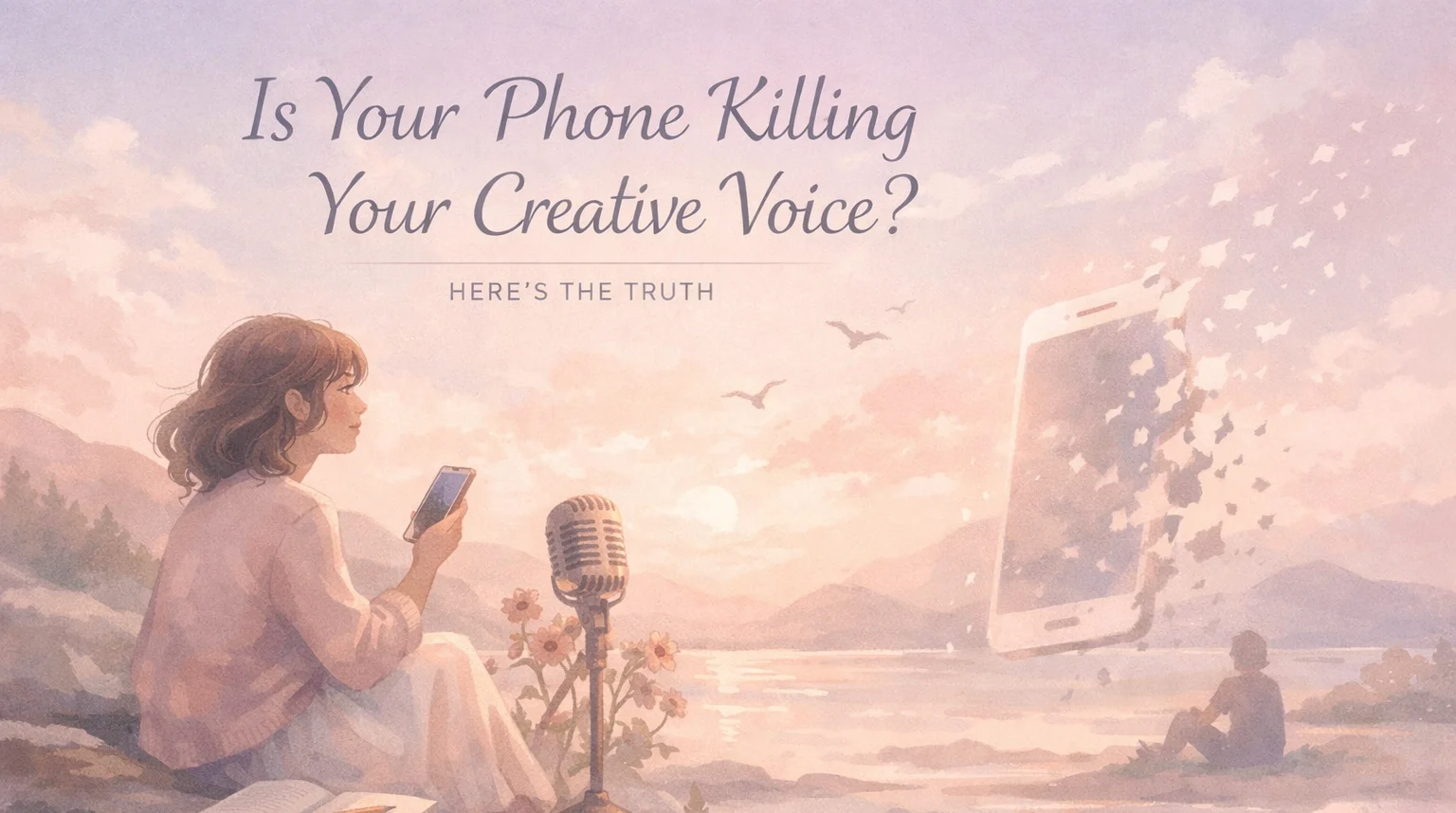
![[HERO] Is Your Phone Killing Your Creative Voice? Here's the Truth](https://cdn.marablism.com/FCNMpFqCSmr.webp)
You reach for your phone without thinking.
Between paragraphs. During pauses. In the quiet moments when an idea might otherwise arrive. The screen lights up and something in you relaxes: or maybe numbs. And later, when you sit down to create, there’s nothing there. Just static. Just that familiar feeling of reaching inward and finding the well empty.
You wonder if you’ve lost it. That spark. That creative voice that used to come so easily.
Here’s what I want you to know: You haven’t lost anything. But something is happening. And it’s worth looking at gently, without shame.
What’s Actually Happening in Your Brain
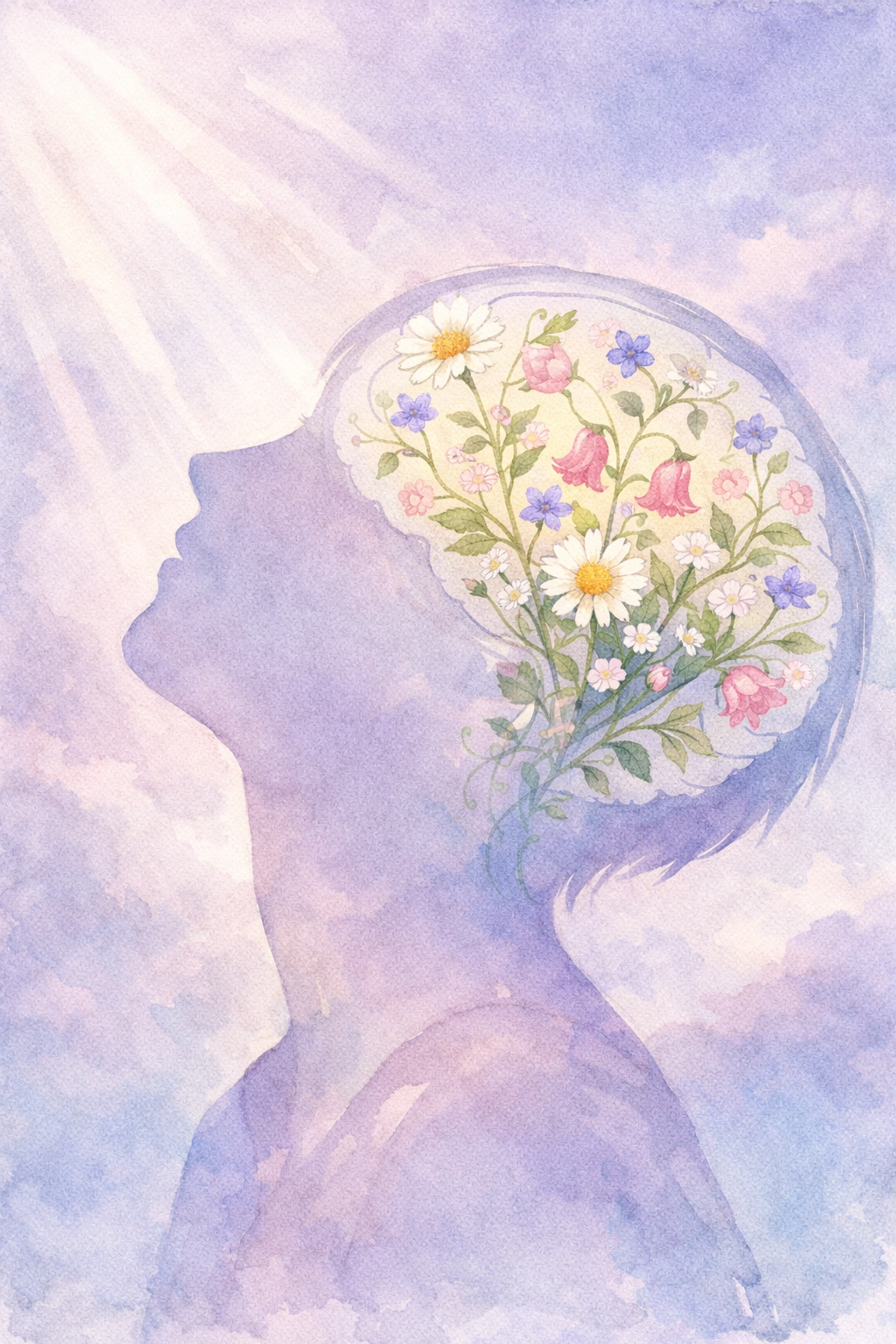
When researchers studied people with heavy smartphone use, they found something specific: reduced activity in the prefrontal cortex and temporal areas of the brain. These are the exact regions responsible for creative thinking: for fluency, flexibility, and originality.
Not broken. Adaptive.
Your brain is doing what brains do: conserving energy. Following the path of least resistance. And right now, that path leads straight to your phone.
The mechanism isn’t mysterious. Each time you reach for your phone instead of sitting with discomfort, boredom, or uncertainty, you’re training your brain that stimulation is always available. That stillness is optional. That waiting is unnecessary.
And creativity? Creativity needs waiting.
The Boredom You’re Not Letting Yourself Feel

There’s a phrase I keep coming back to: “passive recipients of stimulation.”
That’s what we’ve become. We’ve eliminated boredom so completely that we’ve also eliminated the mental wandering that generates creative breakthroughs. Those shower thoughts. Those walks where ideas suddenly arrive. Those moments of staring out windows that used to solve problems you couldn’t think your way through.
Neuroscience shows that unfocused, wandering minds are actually in highly active states. This is where creative thinking flourishes. In the gaps. In the silence. In the uncomfortable stretch of time between stimulus and response.
Your phone fills every gap.
And your creative voice? It lives in those gaps.
You’re not losing your creativity. You’re just never giving it the conditions it needs to speak.
Why This Hits Deep-Feeling Creatives Harder
If you’re sensitive, introspective, someone who feels everything deeply: this pattern hurts differently.
Because you’re not just scrolling mindlessly. You’re often using your phone to manage what you feel. To buffer against overwhelm. To soothe the anxiety that comes with visibility, criticism, or the vulnerability of making something real.
Your inner critic has learned that your phone is a perfect ally. Every time you reach for it instead of creating, that critical voice whispers: See? You don’t actually have anything to say. Good thing you checked Instagram instead.
This isn’t laziness. This is protection.
And you’re allowed to acknowledge what you’re protecting yourself from before you try to change the pattern.
The Truth About Technology and Creativity
Here’s the nuance that matters: technology itself doesn’t kill creativity.
Video games train creative thinking. YouTube enables learning and connection. Digital tools open doorways that didn’t exist before. The problem isn’t the technology: it’s the addiction. The passive overconsumption. The disruptively habitual use that leaves no room for mental effort.
When you use your phone intentionally, with purpose and boundaries, it can enhance your creative life.
When you use it to escape yourself, it silences your creative voice.
The difference is choice. And presence. And being willing to feel the discomfort that arises when you put the phone down and don’t immediately pick up something else.
A Gentle Reset (7 Days to Reconnect)
You don’t need to throw your phone in the ocean or delete all your apps. You need to create small pockets of stillness and notice what happens.
Days 1-2: Morning silence
Let the first 30 minutes of your day be phone-free. No checking. No scrolling. Just you, maybe tea, maybe a journal. Let your mind wander. Notice the discomfort. Stay anyway.
Days 3-4: Create before you consume
Before you open any app, write three sentences. Draw one line. Hum a melody. Make something tiny before you take anything in. You’re retraining the pathway.
Days 5-6: Boredom practice
Choose one activity where you’d normally scroll: waiting in line, sitting in a car, the space between tasks: and do nothing instead. Stare. Breathe. Let your thoughts roam. This will feel excruciating at first. That’s the point.
Day 7: Notice what arrived
By the end of the week, pay attention. Did an idea surface? Did your inner voice get a little louder? Did you feel more present in your body, your work, your life?
You’re not trying to be perfect. You’re trying to create conditions where your creative voice can find you again.
What Changes When You Make Space
The shifts are subtle at first.
You stop mid-reach and catch yourself. You notice the urge to check without acting on it. You sit with discomfort for thirty seconds longer than usual. And then a minute. And then you’re writing something that surprises you, painting something that feels true, thinking thoughts that feel like yours again.
Your creativity doesn’t return all at once. It tiptoes back.
It whispers before it speaks. It tests whether you’re actually listening this time.
And when you prove that you are: when you hold the stillness long enough, consistently enough: it comes home.
You’re Allowed to Want Your Voice Back
There’s no shame in admitting that something isn’t working. That your relationship with your phone has become a creative block you can’t think your way around. That you miss the version of yourself who could sit with an idea and let it unfold.
You’re allowed to want that back. And you’re allowed to make small, gentle changes to invite it.
This isn’t about willpower or discipline or becoming someone who never struggles. It’s about noticing the pattern, naming what it’s costing you, and choosing differently: just once. And then again.
Your creative voice isn’t gone. It’s waiting in the quiet you keep refusing to enter.

If you’re ready to go deeper…
I created The Gentle Guide for Deep-Feeling Creatives for people who know their creativity is still there: buried under overthinking, people-pleasing, and the constant noise of modern life. It’s not about productivity hacks or forcing yourself to create. It’s about coming home to the voice that’s been waiting for you to listen.
If that feels like what you need, you’ll find it here on my website.
And if not? That’s okay too. Sometimes just reading these words is enough to shift something. To give you permission to put the phone down. To remember that your creative voice never left: it’s just been drowned out.
You’re allowed to claim it back. Starting now. Starting small. Starting with one quiet morning where you let yourself be bored enough to hear it again.
Want to Go Deeper?
If you’re tired of the noise and ready to reclaim that quiet, creative space, I’m here to walk with you.
Whether it’s silencing the inner critic or finding the courage to speak your truth, this is exactly what we explore together inside my 1:1 coaching sessions. We’ll work on releasing the overthinking and rebuilding that self-trust, so you can bring your vision to life in a way that feels aligned, grounded, and completely yours.
Book a Session here
With much love,
Maria

https://mariaduckhouse.com | Let’s connect on Instagram
Buy me a coffee