You sit down to create and the voice starts immediately.
This isn’t good enough. Who do you think you are? No one wants to see this.
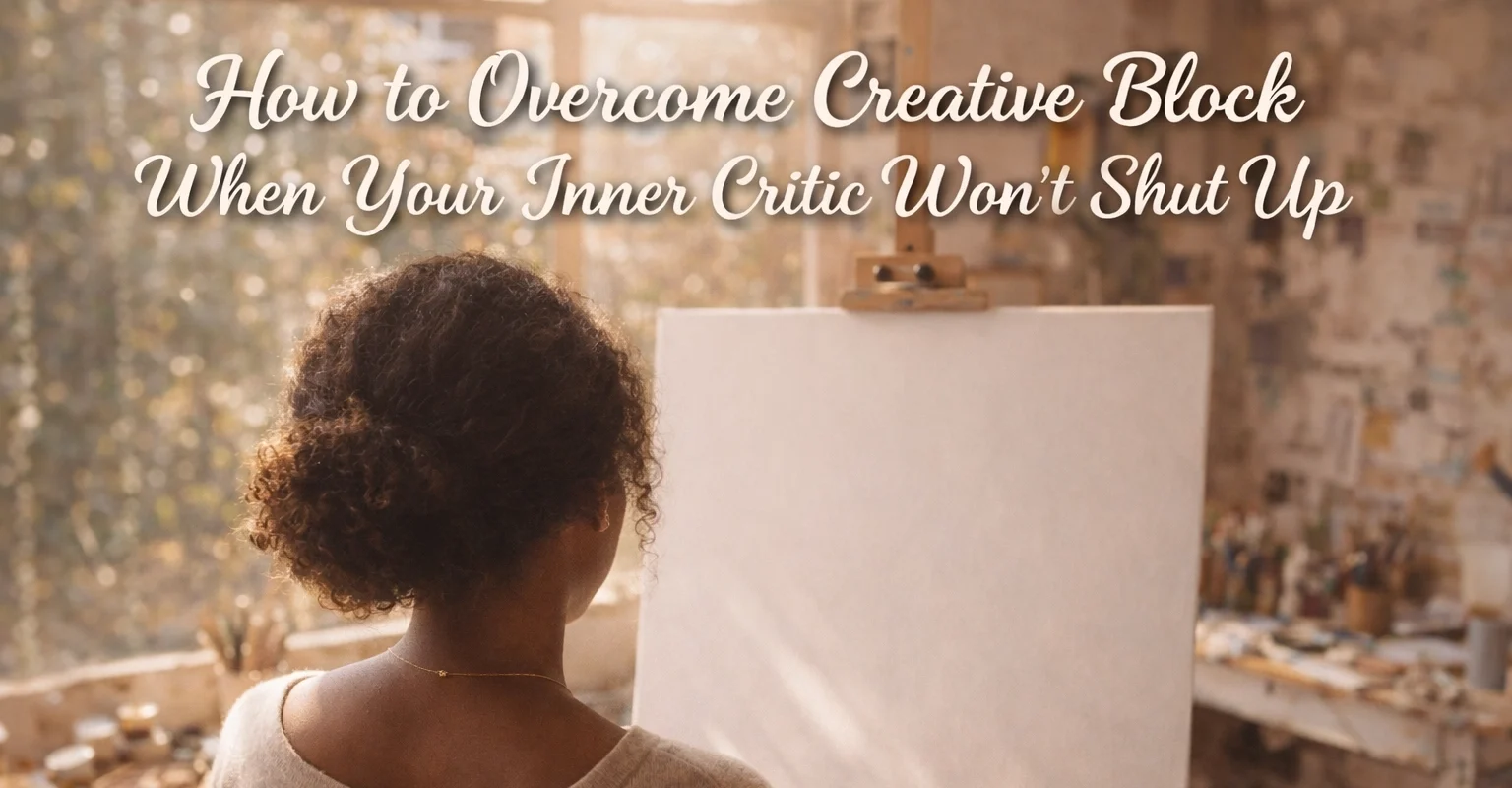
The blank page stares back. Your hands freeze. The ideas that felt so alive in your mind ten minutes ago have dissolved into static. This is creative block, and it’s not about lacking inspiration: it’s about that relentless inner critic that won’t let you breathe long enough to find out what wants to come through.
If you’re a deep-feeling creative who overthinks everything, you already know this voice. It masquerades as protection, as quality control, as realism. But really? It’s fear dressed up as standards.
Let’s talk about how to overcome creative block when your inner critic has taken up permanent residence in your head.
The Inner Critic Isn’t Trying to Hurt You (But It Is)
Here’s what I’ve learned supporting creatives through this exact struggle: your inner critic developed as a survival mechanism. At some point, perfectionism kept you safe. Maybe it earned approval. Maybe it protected you from judgment or rejection. Maybe it was the only way to feel worthy.
That voice isn’t trying to destroy you. It’s trying to protect you from vulnerability.
But now it’s doing the opposite. It’s keeping you stuck, silent, and disconnected from the very thing that makes you feel most alive: your creative expression.
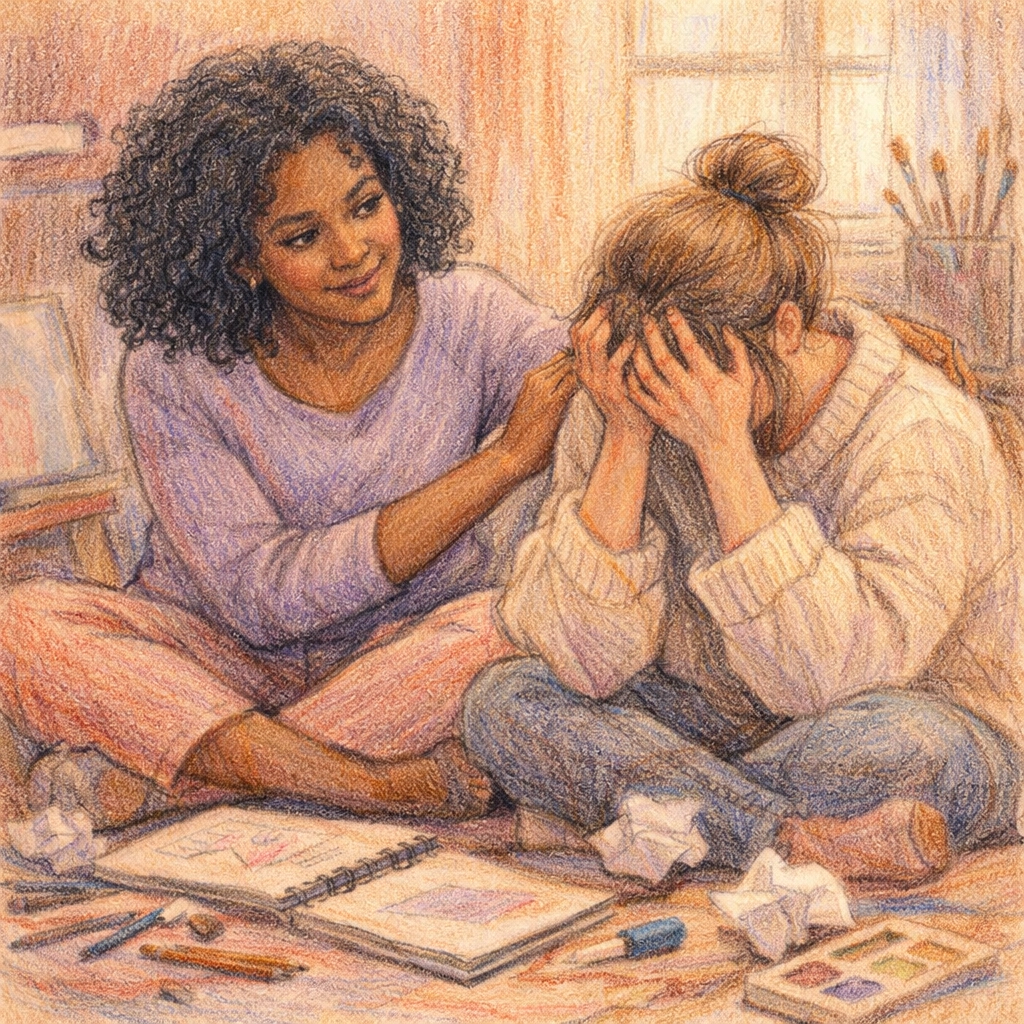
The inner critic speaks in absolutes. Always. Never. Not good enough. Everyone will judge you. It collapses all possibility into a single, catastrophic outcome. And when you’re already prone to overthinking, that voice finds fertile ground.
You don’t need to silence it completely (honestly, you probably can’t). You need to learn how to create despite it. To build enough trust in your creative process that the critic becomes background noise instead of the director.
Shift From Outcome to Process
The quickest way to feed your inner critic is to judge your work while you’re making it. When you measure every brushstroke, every sentence, every note against some imagined “perfect final piece,” you’re setting yourself up for creative block before you’ve even started.
Here’s the reframe: you’re not creating to produce something museum-worthy. You’re creating to express something true.
The process matters more than the product. Not because the outcome doesn’t matter: it does. But because fixating on the outcome paralyzes the process. And without process, there is no outcome.
Try this: before you begin creating, set a clear intention that prioritizes exploration over perfection.
Today I’m creating to see what wants to emerge. I’m not creating to impress anyone.
This is play. This is discovery. This is me learning my own language.
You’re allowed to make bad art. You’re allowed to write terrible first drafts. You’re allowed to experiment and fail and throw things away. That’s not creative block: that’s creativity.
Create Too Fast for the Critic to Keep Up
Your inner critic needs time to gather its evidence and build its case against you. When you create quickly and boldly, you deny it that time.
This doesn’t mean rushing or being careless. It means working with confident, decisive strokes. It means committing to marks before you’ve fully thought them through. It means trusting your instincts more than your fears.
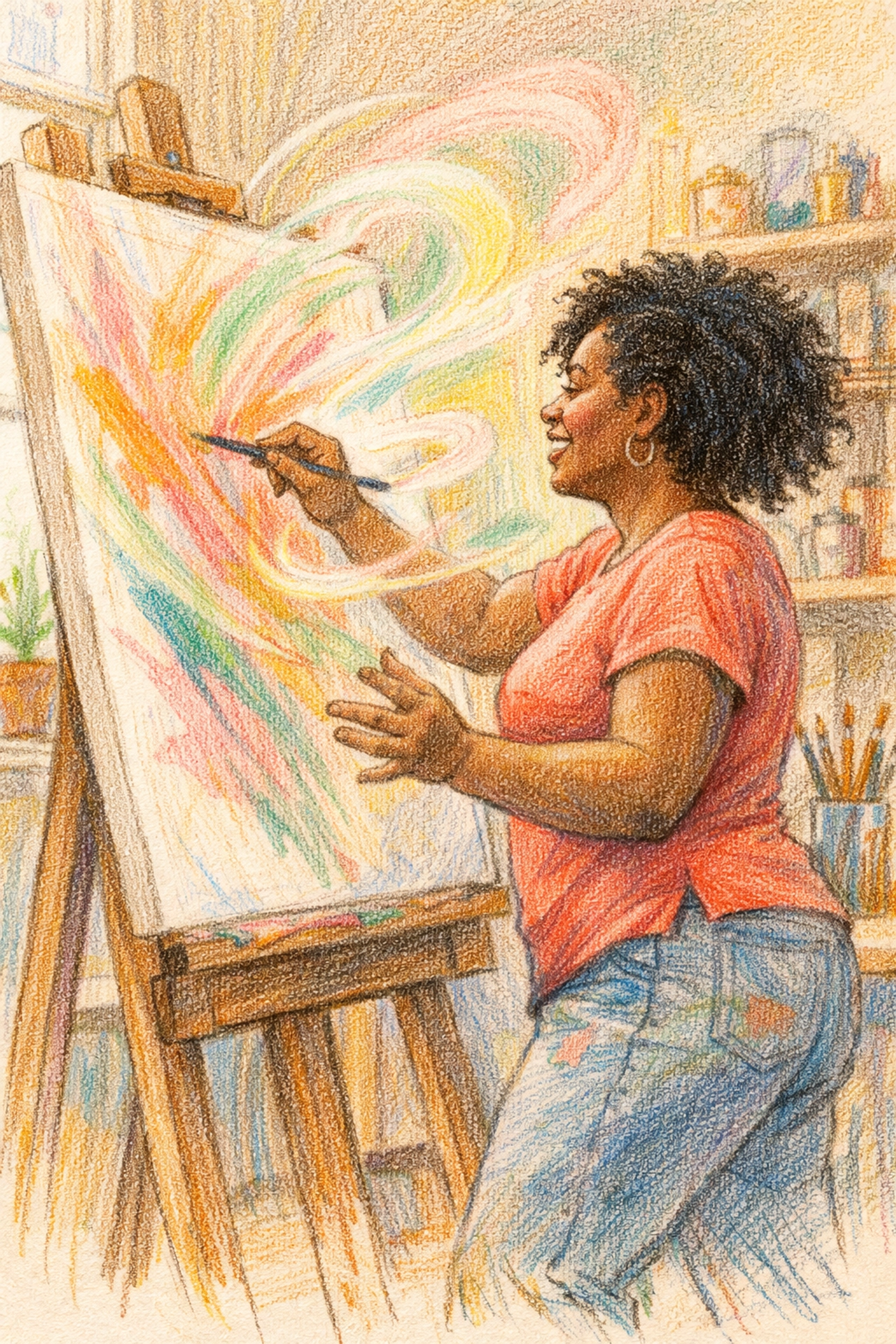
Some practical ways to outrun the critic:
- Set a timer. Give yourself 10 minutes to create without stopping, editing, or judging. Just move.
- Work small. Lower the stakes by working in a sketchbook, a notes app, or rough drafts. Small scale = less pressure.
- Make multiples. Create five versions in the time you’d usually spend agonizing over one. Repetition opens creative doors.
- Limit your tools. Use only three colors, one pencil, 100 words. Constraints force you to act rather than deliberate.
When you work this way, you’ll notice something: the critic’s voice gets quieter. Not because it’s gone, but because you’re too busy creating to listen.
Break the Project Into Impossibly Small Steps
Creative block often shows up when a project feels too big, too undefined, too overwhelming. Your brain can’t figure out where to start, so the inner critic fills that uncertainty with doom.
The antidote? Make the first step so small it feels almost silly.
Not “finish the painting.” Just “mix three colors.”
Not “write the essay.” Just “write one terrible sentence.”
Not “compose the song.” Just “hum a melody into your phone.”
When you break creation into micro-actions, you remove the critic’s foothold. There’s nothing to judge yet. You’re just exploring. Just beginning. Just seeing what happens next.
This approach also gives you a trail of small wins. Each tiny step proves the critic wrong. I am creating. I am moving forward. I am capable.
Give Yourself Permission to Be Messy
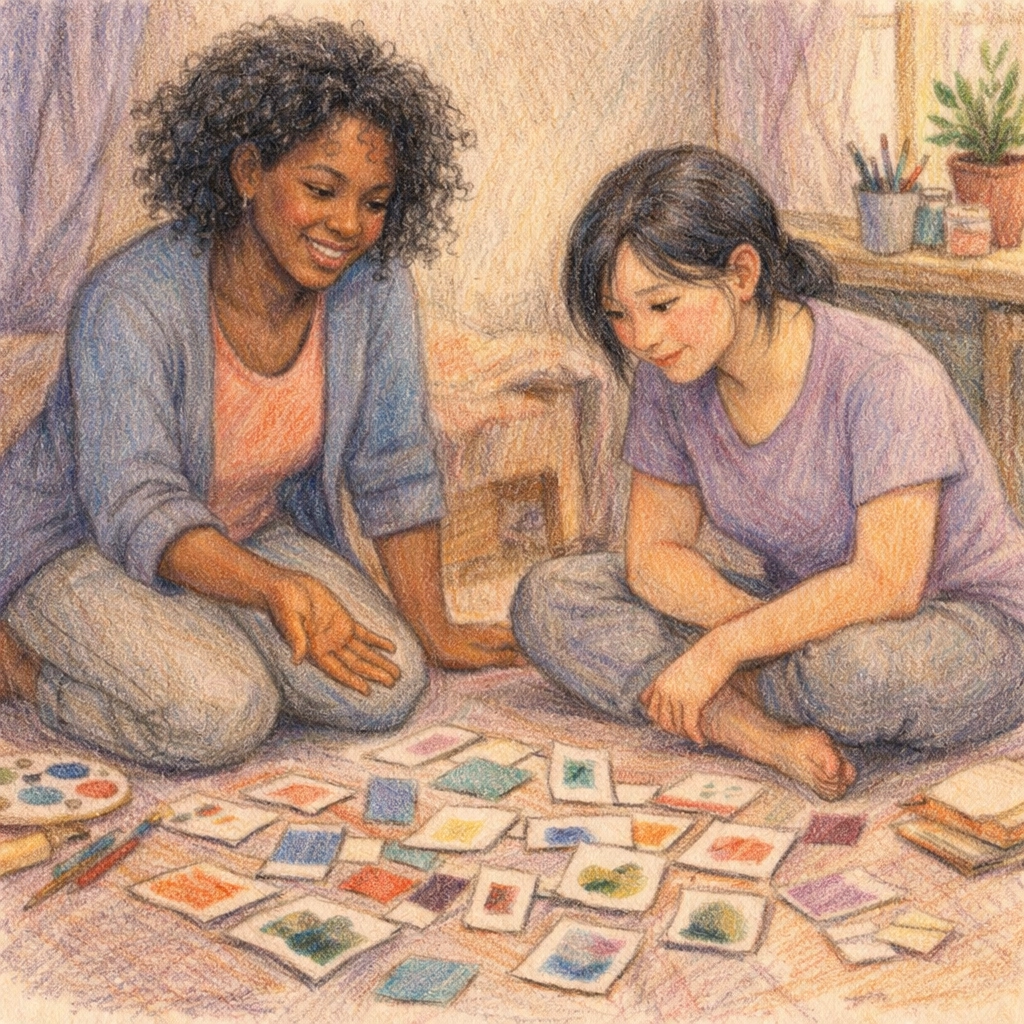
The inner critic thrives on the belief that good art emerges fully formed, polished, and perfect. That belief is a lie.
Every piece of work you admire went through ugly stages. Every creative you respect has produced mountains of mediocre work. The difference isn’t talent: it’s permission.
Permission to be a beginner. Permission to struggle. Permission to create things that will never see the light of day because they’re just stepping stones to something better.
You are allowed to make art that’s awkward, unfinished, or “not your best.” You’re allowed to explore techniques you’re terrible at. You’re allowed to create just for you, with no intention of ever sharing it.
The more you practice mess, the less power the inner critic has. Because perfectionism can’t survive in an environment where imperfection is welcomed.
Keep Going Even When It Feels Bad
Here’s the uncomfortable truth about overcoming creative block: you have to create through the doubt.
The inner critic will whisper that you’re wasting your time, that this particular piece isn’t working, that you should just stop. And sometimes, you’ll believe it. You’ll create anyway.
Not because you’re confident. Not because the work feels good. But because you’re learning to trust the process more than the voice.
Persistence doesn’t mean forcing yourself through misery. It means showing up with gentleness and curiosity even when the critic is loud. It means choosing creativity over comfort. Again and again.
Some days you’ll create something that surprises you. Other days you’ll create something forgettable. Both are necessary. Both are part of the path.
You’re Not Blocked: You’re Protecting Yourself
If you’re sitting with creative block right now, I want you to know this: you’re not broken. You’re not lacking talent or discipline or creativity. You’re afraid of being seen and judged and rejected: and that’s deeply human.
The inner critic is just the voice of that fear, trying to keep you small and safe.
But safety at the cost of expression isn’t really safety. It’s stagnation.
You can learn to create with the critic present. You can build a practice that values process over perfection, exploration over outcome, and messy progress over frozen potential. You can reclaim your creative voice: not by silencing the fear, but by choosing to create anyway.
If you’re interested in going deeper with this work: to unpack the patterns, beliefs, and fears that keep you creatively stuck: I’d love to support you. My Unapologetically You coaching is designed for deep-feeling creatives who are ready to reconnect with their authentic creative expression and quiet the inner critic for good.
Let’s create something real together.
Soulfully, maria
https://mariaduckhouse.com | Let’s connect on Instagram
Buy me a coffee